Published: 25 July 2026 | Category: Global Trade / Geopolitics
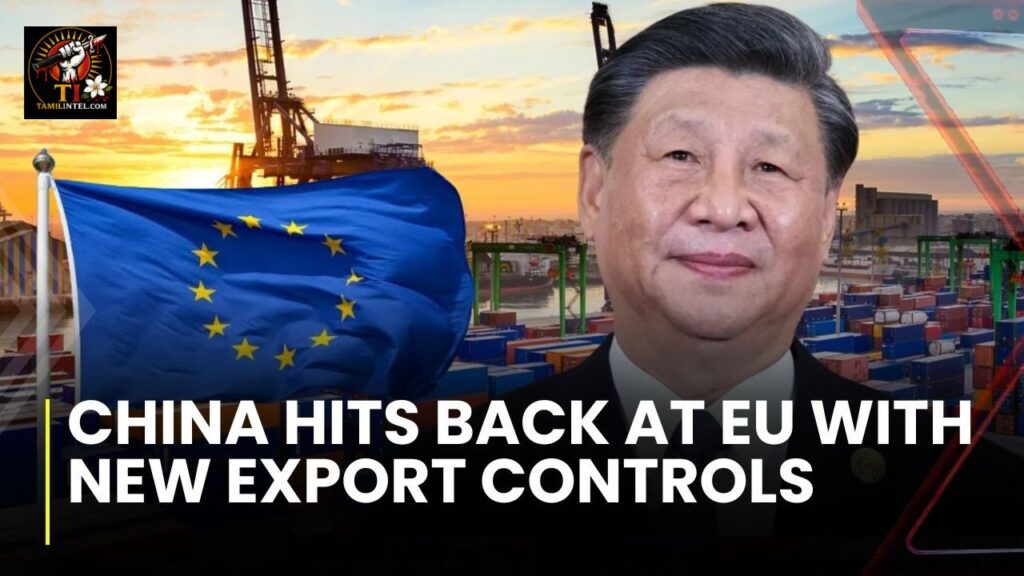
Tensions flare as Beijing responds to the EU’s 21st Russia sanctions package by placing export controls on 14 European entities. Learn how these new restrictions on dual-use items disrupt supply chains across eight EU member states.
🎥 Highlights / Video
Twitter post reporting China’s export restrictions on EU entities
Quick Overview
Tensions between China and the European Union have flared into a tit-for-tat trade dispute, after the EU unveiled its latest sanctions package targeting Russia — and China responded swiftly with its own export restrictions against European organizations.
What Happened
On 23 July 2026, the European Union officially adopted its 21st sanctions package against Russia. As part of the measures, the EU added 14 companies based in China and Hong Kong to its sanctions list, alleging their involvement in supporting Russia amid the ongoing conflict.
Within days, China announced a reciprocal move: it placed 14 EU-based organizations under export control measures. China cited the protection of national security and interests, compliance with international non-proliferation obligations, and a response to what it described as the EU’s “unfriendly actions.”
What the Restrictions Mean
Under China’s Export Control Law and dual-use regulations:
- 🚫 Chinese exporters are banned from supplying dual-use goods (items with both civilian and military applications) to the listed EU organizations.
- 🚫 Foreign parties are also prohibited from transferring or supplying China-origin dual-use items to these entities.
- ⏹ All ongoing transactions must cease immediately.
- 📝 Exceptions require special approval from China’s Ministry of Commerce.
Who Is Affected
The 14 targeted EU organizations span eight member states:
Italy, Germany, France, Poland, Netherlands, Czech Republic, Belgium, and Latvia
Broader Context
This marks a sharp escalation in EU–China trade relations. The EU frames its sanctions as part of efforts to enforce pressure on Russia, while China positions its response as a necessary defensive measure. The dispute risks disrupting supply chains for sensitive technology and widening the geopolitical rift between Brussels and Beijing.