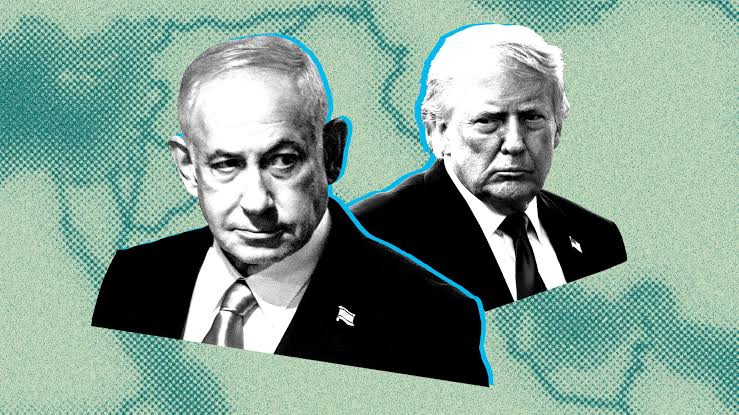
JERUSALEM / WASHINGTON — A high-stakes escalatory spiral in the Middle East has culminated in direct military conflict, as Israel launched targeted airstrikes across central and western Iran this morning. The military action marks a profound and open defiance of U.S. President Donald Trump, who had spent the last 48 hours publicly and privately demanding restraint.
The fast-moving crisis has not only heightened the risk of a broader regional war, but has also fundamentally challenged the credibility of American deterrence, exposing a widening rift between Washington and Jerusalem.
The Chain of Escalation
The current flashpoint began last week when President Trump reportedly issued a blunt warning to Israeli Prime Minister Benjamin Netanyahu, demanding that Israel refrain from expanding its military operations into Lebanon to avoid triggering a direct response from Tehran.
Israel overrode those warnings, launching heavy strikes against targets in Lebanon. True to its word, Iran responded last night, executing a major missile barrage aimed at Israeli territory.
As the missiles flew, Trump immediately went on the defensive, publicly and privately urging Netanyahu to absorb the blow and halt the cycle. Reporting indicates Trump bluntly told allies: “Israel had its strike and Iran had its strike. We don’t need another one.”
Jerusalem, however, refused to take the off-ramp. By dawn, Israeli jets were striking deep inside Iranian territory, explicitly ignoring Washington’s red lines.
The “New Regional Equation”
Israeli military commentators and officials have been unambiguous about the strategic necessity behind the strike. From Jerusalem’s perspective, this wasn’t just about retaliation—it was about preventing a dangerous precedent.
Had Israel stood down, it would have allowed Iran to establish a new regional equation: one in which Tehran successfully extended a blanket of deterrence over Lebanon, effectively checking Israeli military movements against Hezbollah. For Netanyahu’s war cabinet, allowing Iran to dictate the boundaries of Israel’s northern front was an unacceptable strategic vulnerability.
The Cost to American Credibility
While Israel may have re-established its military red lines, the geopolitical fallout in Washington is severe. By so publicly defying the White House, Israel has directly undermined Trump’s carefully cultivated image as a leader who “calls all the shots.”
The strategic consequences of this defiance are two-fold:
- Erosion of Trust with Tehran: If Israel’s actions carry zero consequences from the White House, it will reinforce the view in Tehran that Trump either cannot or will not restrain Netanyahu.
- Devaluation of U.S. Diplomacy: From Iran’s perspective, negotiating a grand bargain or nuclear deal with Washington has little value if the United States is fundamentally unable—or unwilling—to curb Israeli military actions.
The Core Dilemma: An unconstrained Israel increases the likelihood of a prolonged conflict, drawing the United States closer to a war it has actively tried to avoid.
Trump’s Calculus: Preserving vs. Obtaining a Deal
The ball is now back in both Tehran’s and Trump’s courts. Observers note that Trump appears highly unwilling to spend the immense domestic political capital required to genuinely rein in Netanyahu. Beyond angry phone calls and tough public statements, the White House has yet to leverage actual U.S. military or financial aid.
This hesitation reveals a fundamental rule governing Trump’s current foreign policy: Trump is willing to restrain Israel to preserve a deal, but not to obtain one.
Taking on the pro-Israel establishment in Washington is a bruising political battle. From Trump’s perspective, it is a risk only worth taking if a comprehensive diplomatic agreement with Iran is already locked down and secured. Without a guaranteed deal in hand, the White House is left with the worst of both worlds: fractured relations with a key ally, and an emboldened adversary in Tehran.
With both sides refusing to back down, the region enters unchartered territory, and Washington’s leverage has never looked more fragile.